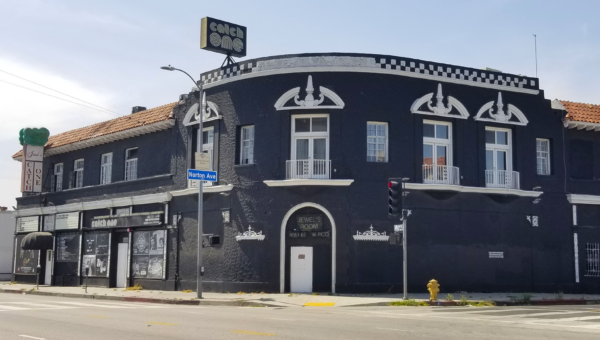
When Jewel’s Catch One opened its doors in 1973 in Los Angeles’ Arlington Heights neighborhood, it became one of the first nightclubs in the nation to serve the Black LGBTQ+ community. Founded by Jewel Thais-Williams, a Black businesswoman and LGBTQ+ activist who faced discrimination firsthand in the early ’70s, Catch One gained a reputation as a sanctuary for LGBTQ+ people of color.
From its inception, Catch One thrived as a cultural and community hub for Black, Latino, and other queer folks who were shut out from the rest of the city’s nightlife scene by exclusionary policies. At its peak, the venue was known as the “Studio 54 of the West,” attracting regular crowds of diverse Angelenos—including celebrities like Madonna, Sammy Davis, Jr., Rick James, and more.
But Thais-Williams and Catch One offered more than a place to drink and dance. During the height of the AIDS crisis, Thais-Williams transformed the establishment into a lifeline for her community. In 1989, she and her partner Rue Thais-Williams, opened Rue’s House in the same building, offering housing and other services for women and children living with HIV and AIDS.
I discovered and reconfirmed over and over that giving to others actually is also giving to yourself.
Jewel Thais-Williams
She also co-founded the Minority AIDS Project and the Imani Unidos Food Pantry, providing refuge for people who had been turned away by their families and had nowhere else to go, and later launched the Village Health Foundation, which offered preventative health care and education in underserved neighborhoods.
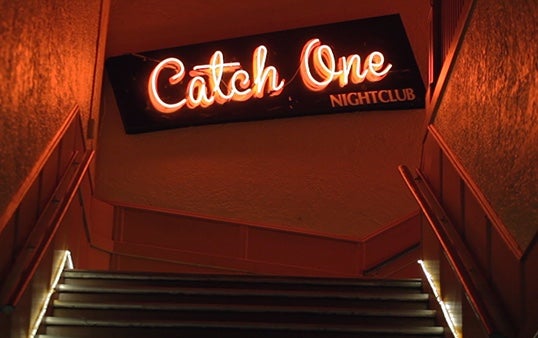
“I became mother, father, sister and cousin to my many daughters, sons, nieces, nephews, employees and friends,” Thais-Williams wrote in a 2019 piece for the Los Angeles Blade. “I discovered and reconfirmed over and over that giving to others actually is also giving to yourself. I never worried about giving. And, everything that I have given I’ve gotten back 100-fold.”
For more than four decades, Catch One offered a rare and vital space where Black queer people could gather, organize, celebrate joyfully, and find support. It defied the social forces that sought to marginalize its patrons—from law enforcement harassment to homophobia and racism.
Thais-Williams sold the club in 2015, but its legacy continues. Today, the venue—now called Catch One—continues to operate, and the intersection in front of the original space has been officially designated Jewel Thais-Williams Square by the City of Los Angeles, cementing her place in the city’s civic memory.
Black queer nightlife in Los Angeles has always been more than entertainment—it has been a space of survival, creativity, and a cradle of resistance for our community.
Giovanna Fischer
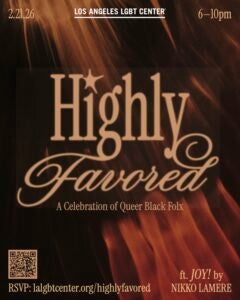
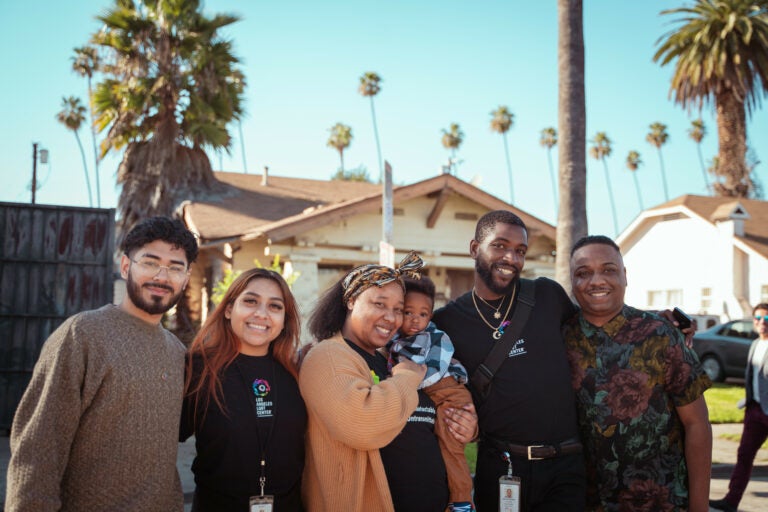
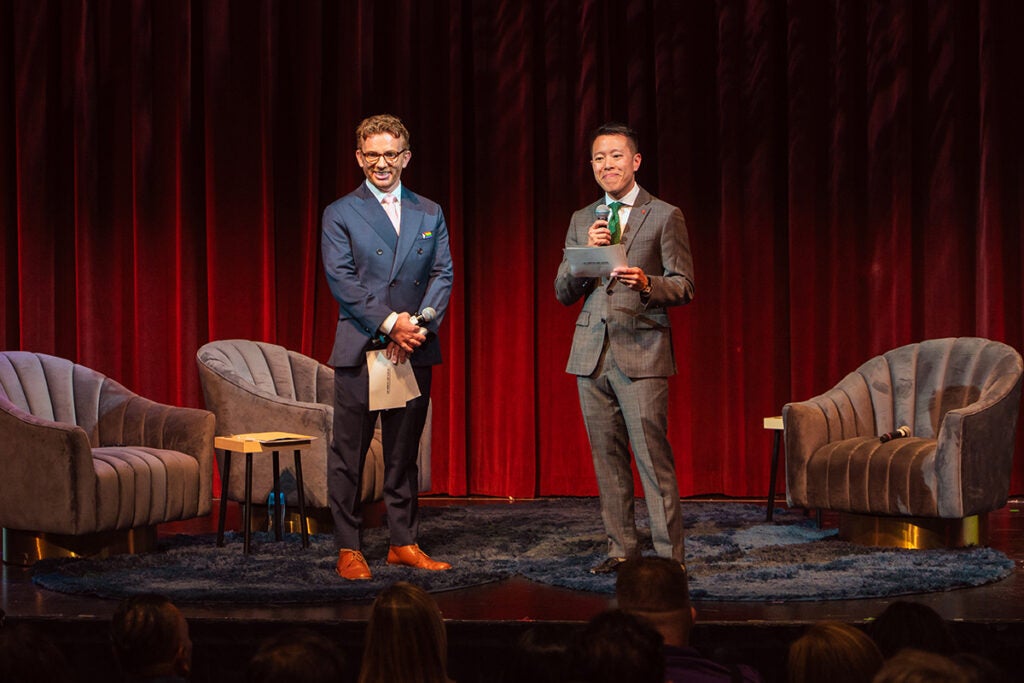
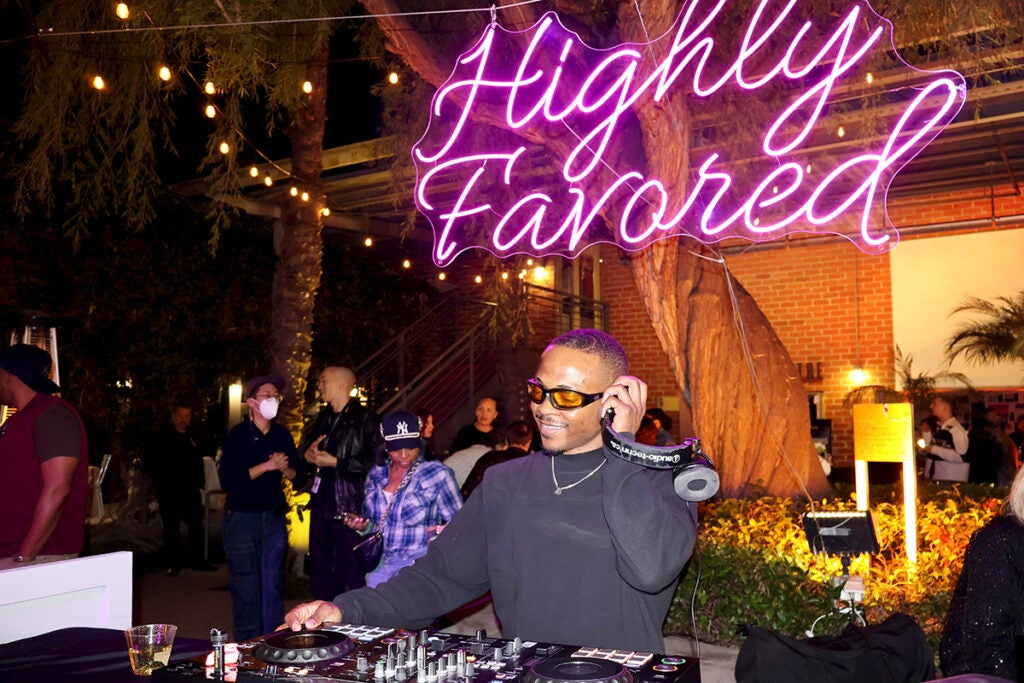
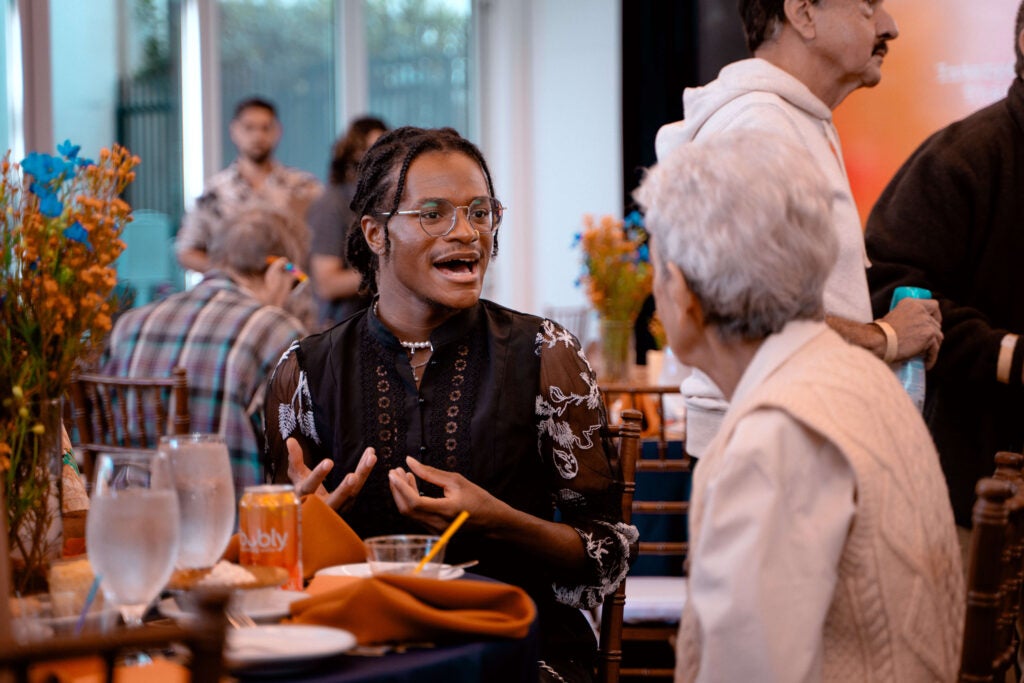
During Black History Month, remembering places like Jewel’s Catch One helps illuminate how Black queer and trans communities have shaped not only Los Angeles’ vibrant culture, but our broader struggles for equality, health care, and self-determination. On Saturday, Feb. 21, the Los Angeles LGBT Center will pay tribute to that legacy at Highly Favored, our annual Black History Month community celebration.
“Black queer nightlife in Los Angeles has always been more than entertainment—it has been a space of survival, creativity, and a cradle of resistance for our community,” said Giovanna Fischer, Chief Equity Officer of the Los Angeles LGBT Center. “This year, Highly Favored honors that lineage, from the legendary dance floor of Jewel’s Catch One—founded by the late Jewel Thais-Williams, whose vision forever shaped Black queer culture in L.A.—to the artists and creatives of today who continue to build community through joy and art.”
Learn more about Highly Favored and RSVP here.