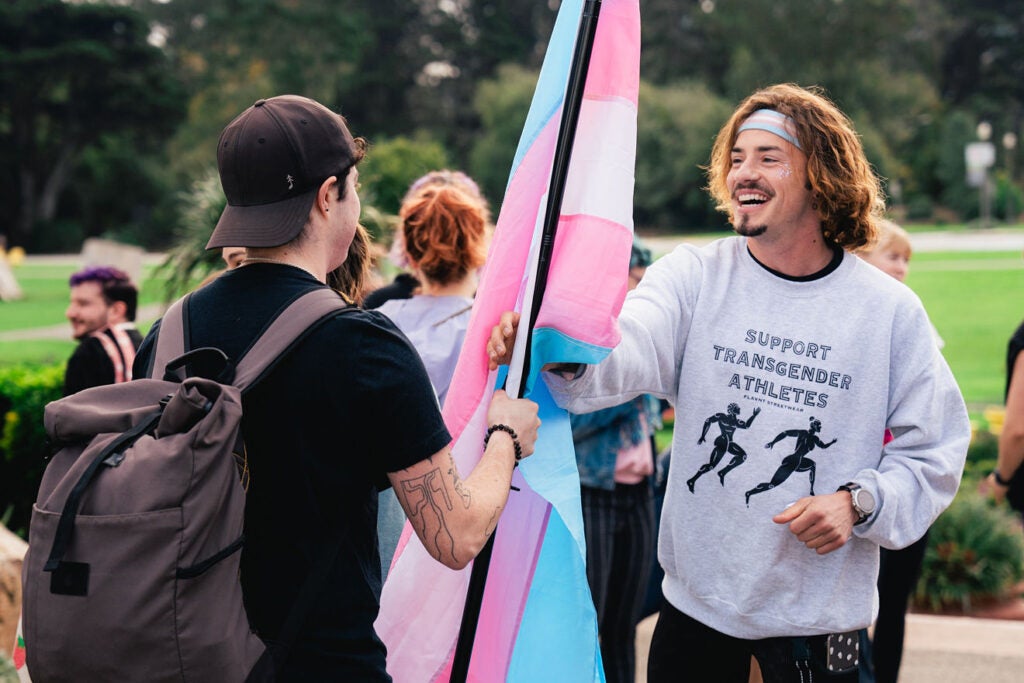
“I used to be so frustrated by the idea of visibility,” says Cal Calamia (they/he), the transgender activist and marathon runner. “But over time, I’ve realized that visibility is actually one of the most transformational tools we have.”
Being visible as a transgender athlete has allowed Calamia to help drive landmark advances for inclusivity in the sport, including the establishment of new nonbinary divisions in races across the country.
After being confronted with only “male” and “female” categories for runners, Calamia began working with race organizers across the country to make the sport more inclusive of TGNBI+ athletes. “Instead of giving up, I decided to do something about it.”
Transness is dynamic, complex, creative, and deeply valuable. It can teach people, inspire people, and enrich communities.
Cal Calamia
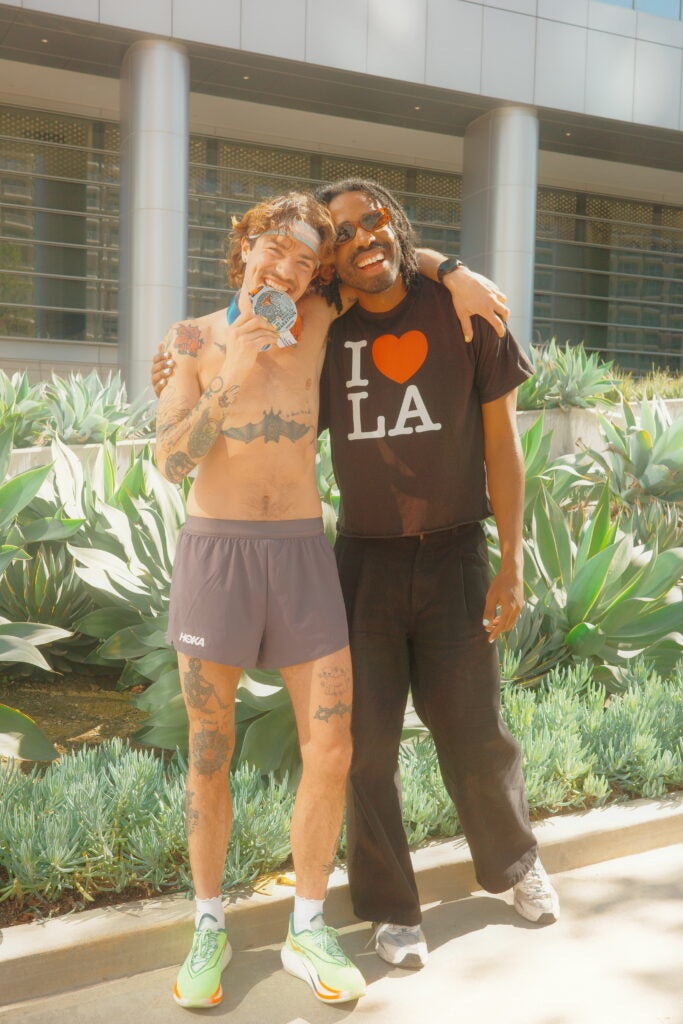
Most recently, Calamia won the nonbinary division of the Los Angeles Marathon for the second time, a category that this year boasted more than a hundred participants. “I’m continuing to race—faster and farther—and doing everything I can to get more trans and nonbinary athletes out there, moving in whatever way feels meaningful to them,” Calamia says.
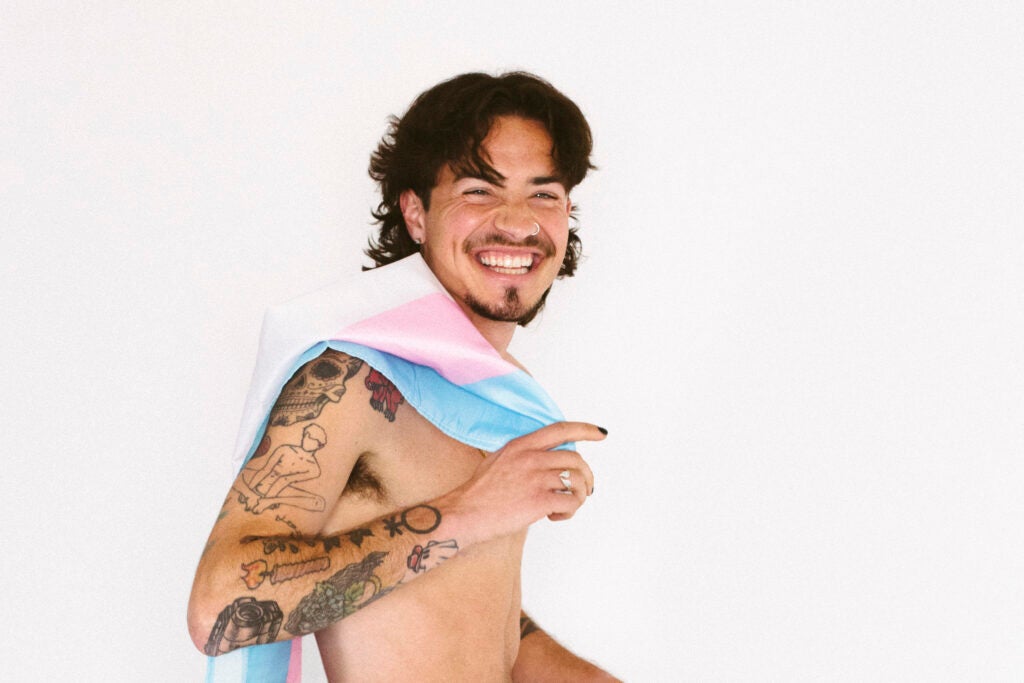
In honor of Transgender Day of Visibility, Calamia spoke with the Los Angeles LGBT Center about their career, advice for young athletes feeling excluded by discriminatory policies, and the power of visibility and inclusion for the TGNBI+ community.
What is your background in sports?
I’ve been an athlete for as long as I can remember. My earliest memories are of having a ton of energy and wanting to run around aimlessly as a child. It wasn’t until middle school that I realized cross country was a sport, and that’s when I started running competitively. Running helped me develop a sense of security, a sense of self, and a feeling of agency over my body and how it moved.
After college, when I began my transition, I turned back to running to figure out how to participate post-transition. I was constantly confronted with “male” and “female” checkboxes, and it felt really discouraging. But instead of giving up, I decided to do something about it and started advocating for the inclusion of trans and nonbinary athletes in the running world and beyond.
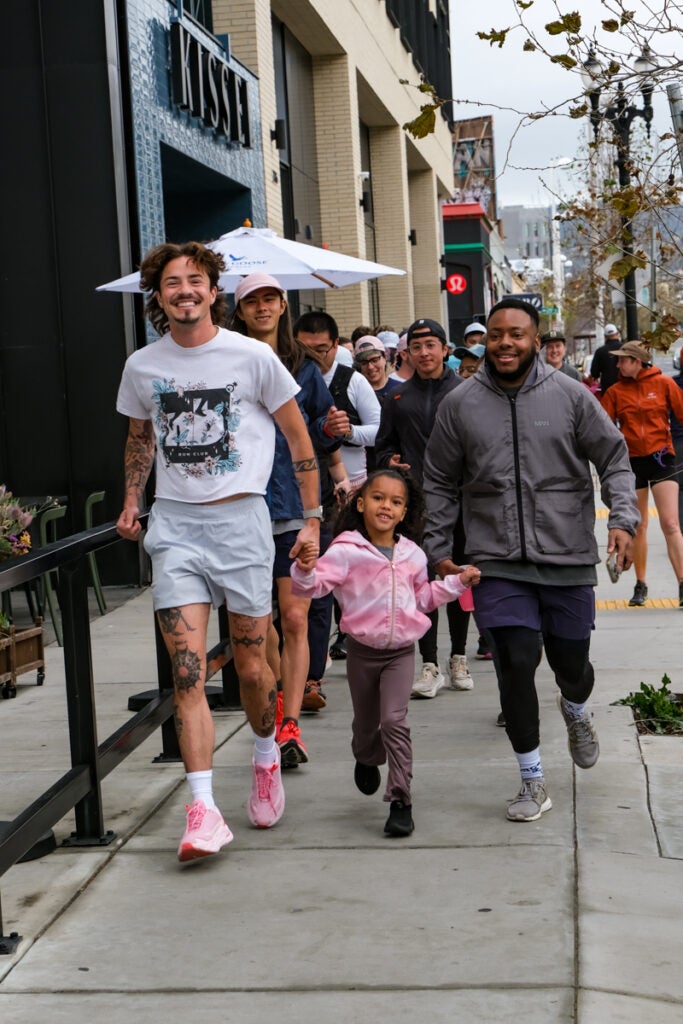
Since then, I’ve completed all the World Marathon Majors in the nonbinary division, placing first or second in each, which wouldn’t have been possible without the grassroots activism that led to those divisions being created. Now I’m continuing to race—faster and farther—and doing everything I can to get more trans and nonbinary athletes out there, moving in whatever way feels meaningful to them.
What would you say to a young TGNBI+ athlete who may feel discouraged by the current landscape?
The first thing I would say is that I’m so sorry this is the world we’re living in. The second is to trust yourself and how you feel about who you are. There’s so much negative messaging in the media and in society telling people they can’t be trans—or that they can’t be athletes if they are trans. Those messages are powerful and pervasive, but what you know about yourself is a fact, and it isn’t going anywhere.
Even when it feels hard to live in that truth, I want them to know this: We’re going to make it better. There are so many queer and trans adults who are committed to creating a better world for trans kids. This work isn’t just happening now—it’s intergenerational work that’s always been happening. History shows us that people eventually realize they should have chosen love and inclusion. Sometimes it takes time, but we’re on our way, and we’re not going to quit. It will get better.
It’s not just that you shouldn’t exclude trans people—you want trans people in your spaces.
Cal Calamia
What does visibility mean to you?
I used to be so frustrated by the idea of visibility. It felt like such a low bar—visibility and remembrance being the only things we supposedly get. But over time, I’ve realized that visibility is actually one of the most transformational tools we have.
Trans people are talked about constantly in legislation and the media, but we’re rarely actually seen. Visibility, to me, is about showing up as real, complex humans and being humanized through our stories and lived experiences. When that happens, it becomes harder to dehumanize us or paint us as a threat. People start to see that we’re just trying to live our lives, do what we love, and have our needs met—like anyone else.
I’ll never forget the first time I truly saw myself reflected in another trans person. I grew up in the Midwest and later moved to San Francisco. I remember seeing an early-transition transmasculine person living their life, visibly happy, and thinking, Oh—this is possible. I can do this. I can be myself. That moment gave me permission to transition.
What do you wish more people understood about the TGNBI+ community?
For a long time, I felt like I was knocking on doors, asking people to include me and people like me. But through conversations and collaborative work, my thinking really shifted.
I used to say, “Including us doesn’t take anything away from anyone else.” And now I honestly think that’s not enough. Including trans people adds something. Transness is dynamic, complex, creative, and deeply valuable. It can teach people, inspire people, and enrich communities.
So now I frame it differently: It’s not just that you shouldn’t exclude trans people—it’s that you want trans people in your spaces. It’s better for everyone when we’re present.
Read More
Trans Day of Visibility 2024: Amplifying TGI Voices at the Los Angeles LGBT Center
‘Trans Pride Forever’: Celebrating 25 Years of Trans Pride LA
Highly Favored Returns with Honorees Hailie Sahar and Elegance Bratton (Photos)