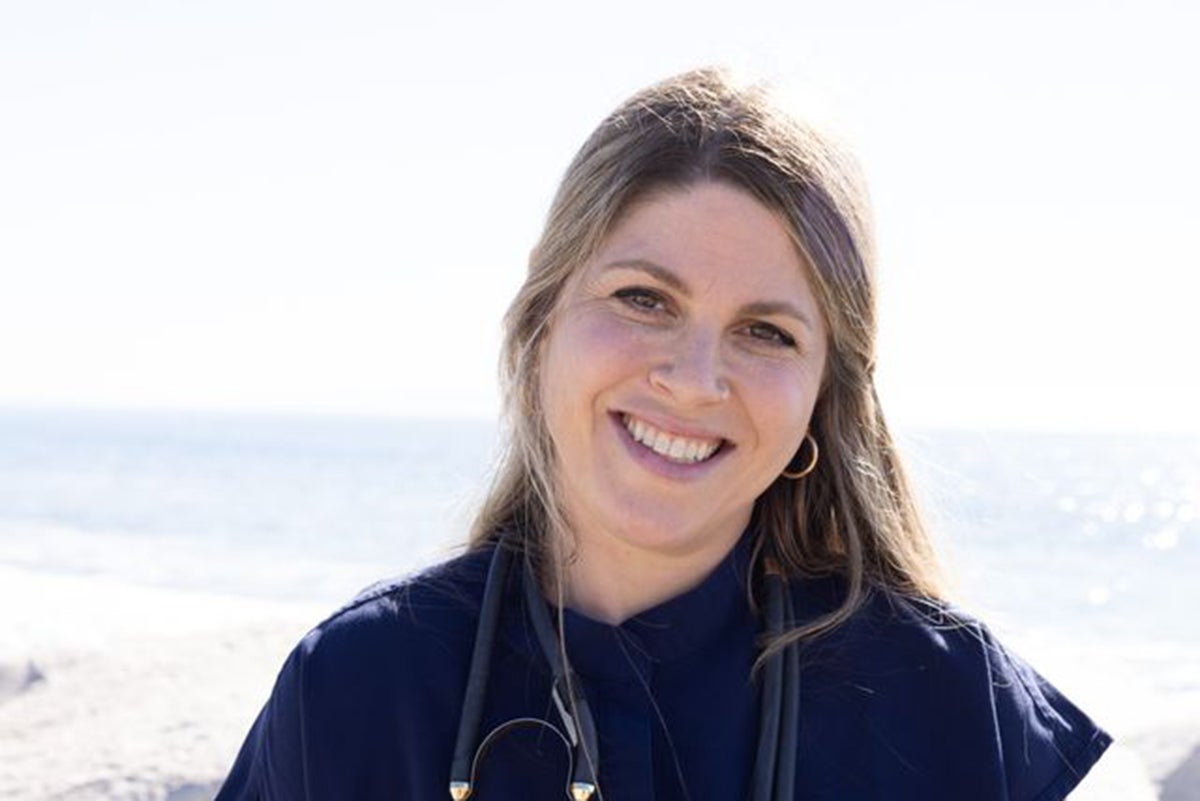
For Dr. Amy Tressan, the Los Angeles LGBT Center’s new director of gynecologic and reproductive health services, reproductive care is inseparable from primary care—because you can’t treat one part of a person without understanding them as a whole person.
“Historically, gynecologic providers have often functioned as a separate entity,” Dr. Tressan says. But at the Center, she works closely with other providers to ensure that every patient receives comprehensive care that meets all of their needs. “I’m able to collaborate closely with other clinicians about their patients before seeing those patients directly for their reproductive health needs.”
She also shares insights from her background in reproductive health to help deepen and further develop this trauma-informed and humanistic approach to care.
Reproductive health care is one of the most important aspects of health care, yet it’s often siloed and undervalued
Dr. Amy Tressan, Director of Gynecologic and Reproductive Health Services
“I see patients of all genders and with all types of anatomy for counseling and procedures,” Dr. Tressan says. “Many clinicians don’t receive enough training to feel comfortable providing a broad range of sexual and reproductive health services, [but] the ability to bring both expertise and comfort in reproductive health into primary care can significantly benefit the patient’s overall health.”
Read more from Dr. Tressan below.
What is your role at the Center?
My title is Director of Gynecologic and Reproductive Health Services, which is a fairly broad role. I see my position as being fully integrated into primary care, which I find really exciting. Historically, gynecologic providers have often functioned as a separate entity, but having this integrated role allows me to provide comprehensive care to patients. I’m able to collaborate closely with other clinicians about their patients before seeing those patients directly for their reproductive health needs.
Reproductive care itself is very broad—I see patients of all genders and with all types of anatomy for counseling and procedures. In my previous work, I developed a particular focus on LGBTQ+ care, and I’m proud to be able to continue that work at the LGBT Center.
Can you talk a bit more about that integrated approach? What impact do you see that approach having on patients and their overall health?
Reproductive health care is one of the most important aspects of health care, yet it’s often siloed and undervalued. Particularly in primary care, many clinicians don’t receive enough training to feel comfortable providing a broad range of sexual and reproductive health services.
Bringing both expertise and comfort in reproductive health into primary care can significantly benefit the patient’s overall health, as well as strengthen the patient‑provider relationship.
So the integration of reproductive health care into the primary care world really allows me to understand what other providers are doing and help teach them some of these skills. I think that’s really important, because some of these things are really simple and we’ve just been told that they’re not because of stigma.
How would you say the Center differs from other places you’ve worked?
In some ways, it’s similar to places I’ve worked before, and in other ways it’s very different. There’s more flexibility and creativity at the Center. We practice evidence‑based medicine, but particularly in areas like gender‑affirming care and reproductive care for people of different genders, the data isn’t always comprehensive. That means we have to be a little more patient-centered in our approach, which I find really exciting.
On a personal level, I’m queer myself, and I think that lends itself to wanting to care for other queer people. I understand the stigma many patients have experienced in health care settings, so I’m deeply committed to creating the safest and most affirming spaces possible.
If you could speak to a prospective patient who’s maybe feeling apprehensive or overwhelmed—maybe someone who’s been mistreated in health care before—what would you say to help them feel more welcome at the Center?
I think it’s completely reasonable to be afraid of health care settings. Many people have been deeply mistreated in the past and continue to be mistreated. But what I’ve seen at the Center is a genuine paradigm shift compared to many medical spaces.
Providers here want to care for the whole person, see people as they are—not as society tells them they should be—and meet them where they are. There’s a strong harm‑reduction approach, and a shared goal of making patients feel as safe as possible. The Center does a great job creating an environment where everyone is welcome. Inclusive imagery is visible throughout the space, people openly share their pronouns and ask others for theirs, and there’s an understanding that many patients arrive with past trauma. Everyone is working to create more positive health care experiences.
I’d say: Try it out. You deserve care that feels safe and affirming.
Read More
“Care Should Never Feel Wrong”: How the Center Is Transforming Medical Care

Inaugural ‘Juice Box’ Centers Women’s History Month with Subversive New Look

Chief Equity Officer Giovanna Fischer on Creating Change Through Imagination